
Chapter 4
Ethics, supplier standards, product safety, automation, data security and the Truvant Excellence System, with no corruption cases recorded in 2025.

Business conduct
Corporate culture at Truvant is the foundation for the organization’s long-term development and shapes relationships with stakeholders. Its construction, development, and promotion are continuous processes requiring constant monitoring, evaluation, and adaptation to dynamic market conditions and employee expectations. The company regularly analyzes the effectiveness of its organizational culture through satisfaction surveys, internal audits, and strategy reviews. Each of these areas is evaluated by the Board during quarterly meetings and annual strategy reviews, allowing actions to adapt to current needs.
Impacts
Risks
Opportunities
Material topics from our double materiality assessment. Select a segment of the ring.
Truvant adheres to the highest standards of ethics and responsibility, fostering a corporate culture based on integrity, transparency, and principles of fair business conduct. Upholding these values is the foundation of trust in both internal relations and interactions with business partners. Managing relationships with business partners plays a key role in responsible business conduct: Truvant requires its suppliers to adhere to business ethics principles, ensuring transparency, fairness, and high-quality cooperation.
Truvant’s global Code of Ethics sets clear standards of conduct that shape a culture of honesty, transparency, and responsibility. Its primary goal is to promote values such as honesty, reliability, and respect, and to ensure full protection of human rights and labor rights. The Code emphasizes equal treatment and actively counteracting all forms of discrimination. It guarantees equal employment opportunities and a safe, prejudice-free work environment, regardless of race, religion, gender, sexual orientation, age, citizenship, disability, or other personal characteristics. Truvant does not tolerate violence, threats, or behaviors leading to intimidation or violating the dignity of employees.
Every leader and every employee at Truvant is responsible for conducting themselves in full alignment with our Code of Ethics. Truvant expects its business partners, including customers, vendors, subcontractors, and others who participate in our business, to adhere to similar standards. The Code is publicly available on Truvant’s website.

Human rights and grievance mechanism
Truvant Europe has implemented a procedure for reporting and dealing with irregularities and violations, a key element in ensuring compliance with ethical principles and human rights, including labor rights. Truvant U.S. adheres to similar standards. Employees, partners, individuals performing work in the value chain, and all other stakeholders can report cases of discrimination and other irregularities. Reports can be made anonymously, and Truvant declares zero tolerance for retaliation.
Reporting channels
Counteracting corruption and bribery
During 2025, no cases of corruption were recorded in Truvant operations in Europe or the U.S.
cases of corruption in 2025
of Truvant Europe employees completed anti-corruption training by the end of 2025
corruption risks identified: 3 rated medium, 5 rated low
Anti-Corruption Policy in place at Truvant Europe since this year; global policy published early 2026
At Truvant Europe, the Anti-Corruption Policy has been in place since 2022. Employees are trained to recognize, prevent, and report corrupt practices. All Truvant employees are also bound by our Code of Ethics, updated and published on the corporate website in early 2025. Every employee is required to review and acknowledge the Code, which covers:
In 2025, we took additional steps to reinforce governance and standardize processes globally. With the support of an external consultant, we ran workshops with the Senior Executive Team and key leaders from all major functions to identify corruption risks relevant to our business in Poland and the United States. Eight risks were identified, three rated medium and five low, based on likelihood and potential impact. We also evaluated existing processes and controls and identified gaps that will be addressed to strengthen our framework.
Our global Anti-Corruption Policy was published in early 2026 on our website and communicated to all employees. Any deviations or violations of company values, including corruption or bribery, must be reported through Truvant’s grievance mechanism at etyka.truvant.com.pl in Europe or ethics.truvant.com in North America.
Business relations with suppliers
As a trusted partner to our customers, Truvant recognizes its responsibility to apply the highest standards of integrity and sustainability across its supply chain. Effective supplier relationship management is a core element of our governance system, directly influencing value creation, operational resilience, and long-term business continuity. We integrate environmental, social, and governance (ESG) criteria into our procurement processes. All key suppliers under Truvant’s management are required to complete assessments and ESG questionnaires, and each year our procurement team reviews suppliers’ ESG practices, procedures, improvement initiatives, and ongoing compliance with Truvant’s Code of Conduct.
of spend* with ESG risk assessment
of temporary labor agencies in Europe and the U.S. signed the Supplier Code of Conduct
of full-service suppliers signed the Code of Conduct**
of buyers trained on sustainable procurement fundamentals
* Spend of suppliers that are fully managed by Truvant. ** Spend related to full-service suppliers of packaging materials, suppliers fully managed by Truvant.
Our sustainable procurement approach ensures that purchasing decisions reflect product quality and service reliability as well as environmental performance, social responsibility, and ethical business conduct.
Direct purchases, including packaging materials such as solid and corrugated board, labels, film and sleeves, thermoformed plastic, molded pulp, rigid boxes and consumables.
Indirect purchases, including temporary labor providers, facility management services, transportation, professional and IT services, and equipment suppliers.
The nature of our business model means that, in some customer relations, certain suppliers are designated directly by clients. In such cases, Truvant’s oversight focuses on logistics, quality control, and payment processes. For suppliers fully selected and managed by Truvant, we apply a structured qualification, selection, and risk management process, including assessments of material quality, delivery performance, environmental practices, and adherence to responsible business standards.
In 2025, we revised our Code of Conduct for suppliers and published it on our website. It sets standards for all suppliers and business partners in four core areas:
Suppliers must follow all regulations related to anti-corruption, anti-bribery, anti-money laundering, antitrust, data protection, product safety, environmental protection, and human rights. They are expected to actively reduce environmental impacts through resource efficiency, climate-related actions, pollution prevention, biodiversity protection, and transparent reporting of environmental incidents.
The Code also requires suppliers to uphold fundamental human rights, including fair compensation, lawful working hours, freedom of association, non-discrimination, and an absolute prohibition of child labor, forced labor, and human trafficking. Suppliers must maintain strong health and safety systems, conduct regular risk assessments, provide training, and report serious incidents. Truvant monitors compliance through continuous oversight and audits and requires suppliers to protect whistleblowers and communicate available reporting channels. Failure to meet these standards, or insufficient progress, may result in termination of the business relationship.
All our suppliers are expected to align with our principles of conducting business, and we expect all key suppliers that we manage and select to sign our Code of Conduct.
In 2025, Truvant launched its global Sustainable Procurement Program, focusing on suppliers fully managed by the company. We reviewed our global supplier base to classify categories and define responsibility scopes, forming the foundation for a comprehensive ESG risk assessment of our value chain to be completed in 2026.
To strengthen internal capabilities, all buyers received training in 2025 on sustainable procurement fundamentals, supplier engagement, and ESG-aligned evaluation practices across the value chain, delivered by an external expert.
In 2025, Truvant conducted five audits of material suppliers as part of our supplier management program and ESG due diligence framework. Our audit methodology and frequency are governed by internal procurement procedures and informed by our annual supplier evaluation. A risk-based approach keeps audits targeted, proportionate, and focused on areas with the highest potential impact across our value chain.
All supplier audits carried out in 2025 delivered positive results, demonstrating strong engagement in both quality management and ESG performance. Material suppliers have established social policies and are implementing initiatives that generate measurable environmental benefits, such as improved resource efficiency, enhanced environmental protection, and responsible operational practices. Although ESG maturity varies with supplier size and capacity, all audited suppliers have formalized ESG plans and are actively pursuing actions aligned with their commitments.
In the near future, we plan to strengthen collaboration with key suppliers to jointly identify and develop initiatives that reduce the overall carbon footprint across the value chain, benefiting both our business and our customers.
Product and service safety
Our clients are global brands operating in the CPG sector. At Truvant, we pack and deliver several hundred thousand pallets of finished products to the market every year. As a trusted business partner, we execute processes in line with our clients’ expectations and standards. At the same time, we prioritize the safety of packaged products and the end consumer, which is an integral part of our social responsibility.
We carry out packaging processes in accordance with client guidelines and widely accepted standards, with a focus on continuous improvement. Most of our facilities operate under a quality management system based on international ISO 9001 standards and industry-specific BRC standards. Our operational processes are subject to ongoing oversight and regular certification, ensuring transparency. Depending on client requirements and industry specifics, our facilities in Poland and the U.S. comply with:
In our U.S. facilities, we also ensure compliance with food production regulations:
Market feedback: we systematically analyze reports, categorizing them by significance to the client, so we can focus on the areas with the greatest impact on customer satisfaction and consumer safety.
Audit results: we review observations from client audits to better understand expectations, identify improvement areas, and respond to evolving needs.
As part of our corporate standards, we have implemented the CEPA (Customer Experience Process Audit) program in Truvant Europe, focusing on process and product quality verification. Every identified gap or non-conformance requires analysis and corrective action, followed by effectiveness verification.
We use advanced tools to support quality management, setting us apart from other co-packers. Our operating system enables precise tracking of products and materials at high production volumes, with real-time communication with customer systems, plus a document and procedure management system essential for serving multiple clients with diverse quality requirements.
Automation and innovation
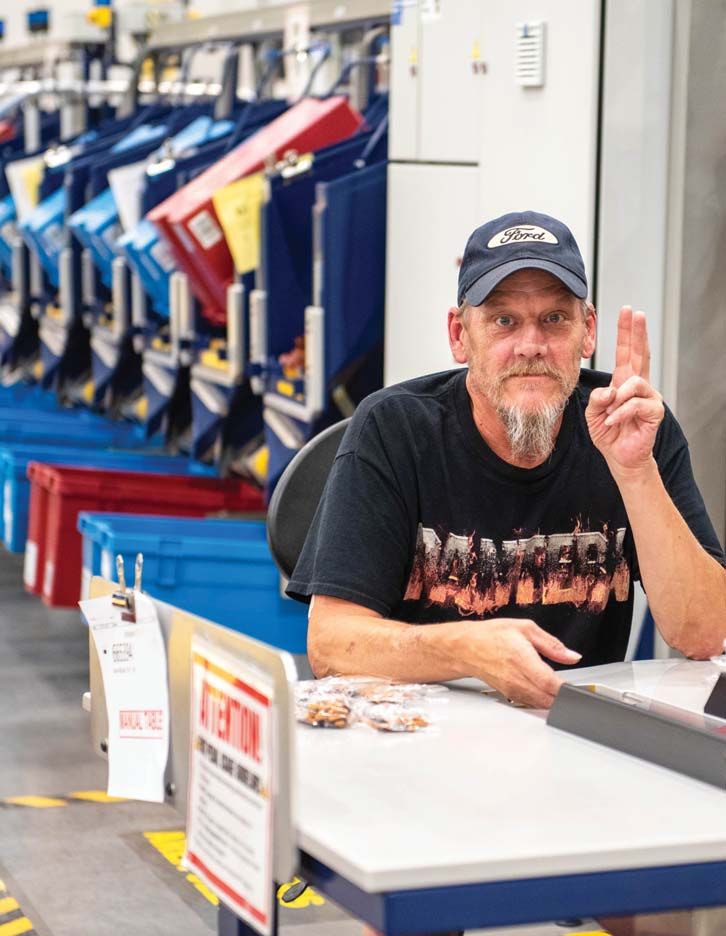
Innovation and Sustainability is one of the four pillars of our business strategy. Within this pillar, our engineering team is developing an automation strategy based on roadmaps for key locations, focusing on areas where implementation delivers the greatest value. These roadmaps are the foundation for planning investments at individual sites. For one of our customers, the company is already at an advanced stage of implementing an innovative project.
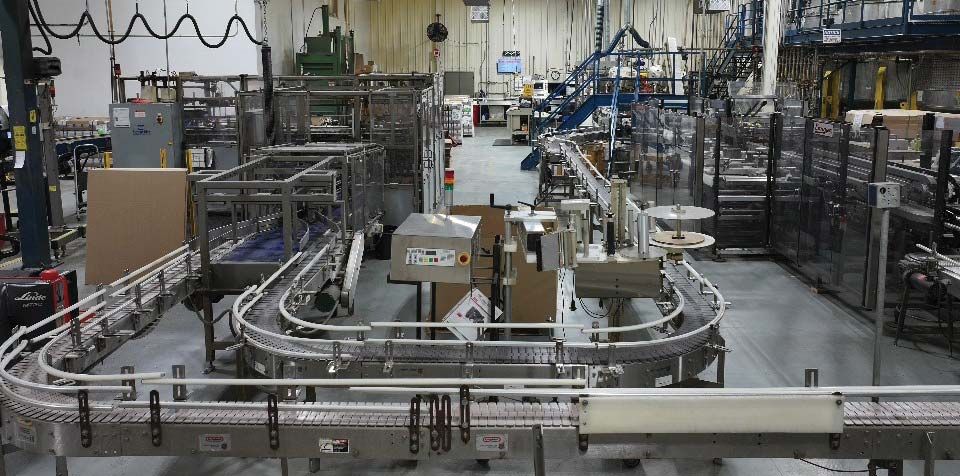
Automation improves workstation ergonomics and is supported by training programs for line operators who manage new technologies. In the coming years, the company will continue to optimize its automation roadmap and strengthen collaboration with customers by proposing new solutions that enhance competitiveness and drive process innovation.
Data governance and cybersecurity
Effective data management is a core component of Truvant’s governance framework and supports responsible, transparent, and efficient operations across our global network. In a highly technical and fast-paced contract packaging environment, reliable data is essential for ensuring product quality, regulatory compliance, and continuous improvement.
Truvant maintains a structured Data Governance framework that ensures the accuracy, consistency, accessibility, and security of operational data across all sites. It defines clear roles, standards, and controls for how data is collected, managed, stored, and shared throughout the packaging lifecycle, supporting compliance with regulatory and customer requirements. Strong data governance improves operational efficiency, traceability, audit readiness, and customer transparency, enabling reliable reporting and informed decision-making. Data is managed as a strategic asset that supports Truvant’s digital transformation and long-term sustainability and governance objectives.
Cybersecurity is a core element of our governance approach. Our Information Security Policy is aligned with ISO 27001. We employ a multilayered defense model that includes network segmentation, firewalls, endpoint protection, continuous vulnerability scanning, penetration testing, and 24/7 monitoring of critical systems. Access to sensitive data is managed through strict role-based access controls (RBAC), multifactor authentication, and privilege access logs reviewed on a regular basis. Incident response procedures define clear escalation paths, roles, and crisis communication protocols, ensuring rapid containment and remediation of potential threats.
Employee awareness is a vital component of our cybersecurity culture. All employees participate in mandatory cybersecurity training twice a year, complemented by simulated phishing campaigns. Through this integrated approach, we work to protect the confidentiality, integrity, and availability of information across our organization, support regulatory compliance, and reinforce trust with customers, employees, and stakeholders.
Truvant Excellence System
TES is our internal program that supports our strategy in the area of Operational Excellence and Productivity. Its goal is the continuous improvement of processes and the enhancement of efficiency across all operations. The system is built on nine pillars that form a cohesive model for improving quality, safety, and productivity.
TES was introduced in Poland in 2021, where 100% of our plants have already been certified and standardized under this program. Our U.S. journey began more recently with the launch of the Dallas facility, which has already adopted several tools from different pillars, such as Safety, Autonomous Maintenance, 5S, Quality, and Focused Improvement, based on business needs.
We plan to implement TES in our U.S. food facility in 2026, given its critical role in our operations. The rollout will follow a phased approach tailored to each plant, with structured maturity evaluations, driving operational excellence and productivity improvements across all our sites over the next 2–3 years. This initiative is under the responsibility of the Vice President of Global Operations Excellence.
Select a pillar to read what it covers.
Sustainability Report 2025

Start here
CEO statement, business model, sustainability strategy, ESG goals tracker, governance and the double materiality assessment.
Read the overview
Chapter 2
Energy, GHG emissions, materials and packaging, waste, water and the TruGreen programme.
Read the chapter
Chapter 3
Workforce, skills development, health and safety, diversity and inclusion, and employee engagement.
Read the chapterAttachments
The PDF edition includes everything on this page plus two attachments: the ESRS and SASB index, and the independent attestation of our Scope 1, 2 and 3 carbon footprint.
Attachment 1
ESRS and SASB index
Attachment 2
Attestation of carbon footprint