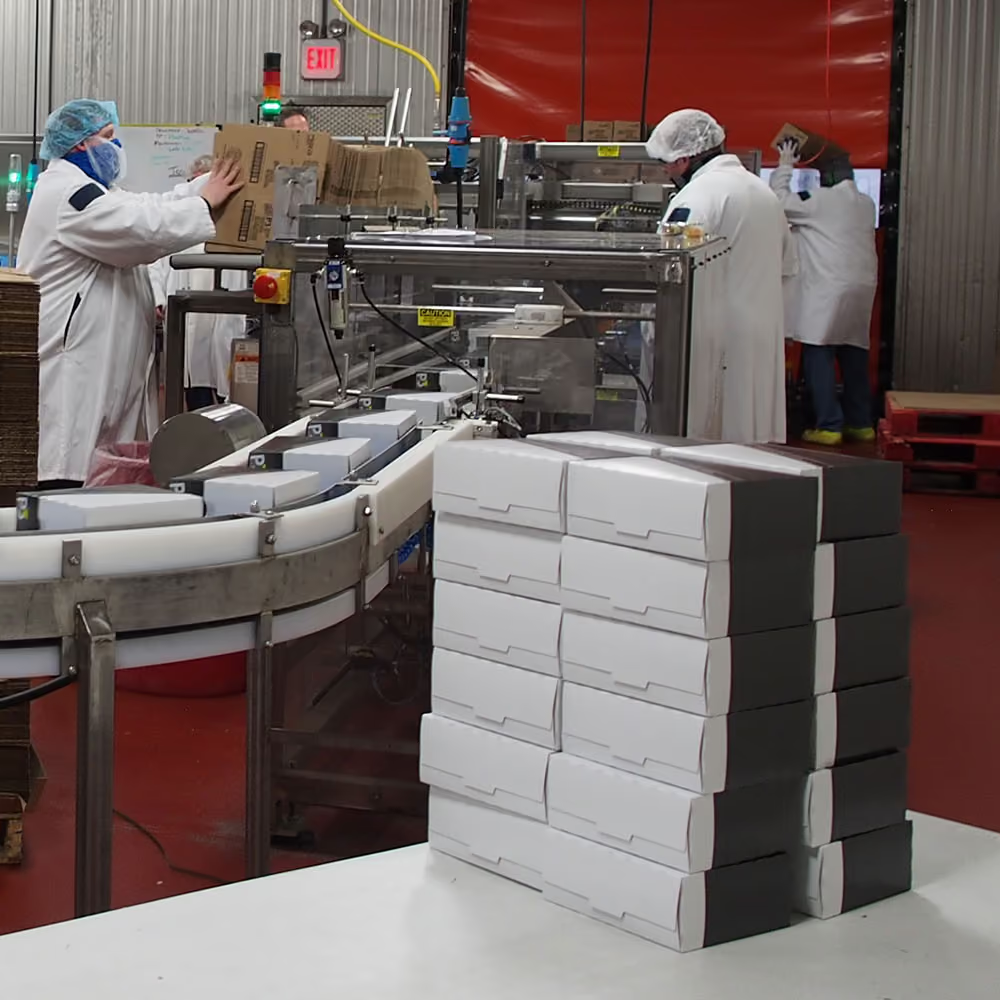
Contract manufacturing, engineered for the line.

Non-food, industrial liquids are a specialty of ours. We run them in the US on dedicated lines with cross-trained crews, fully integrated with the rest of our packaging operations.

From formulation handoff to finished pack.

One capability, run deep, on dedicated lines with cross-trained crews. The same operational standard across every batch.

Process

How we work.

Three steps from your spec to your commercial run.
01

You hand us the formulation.

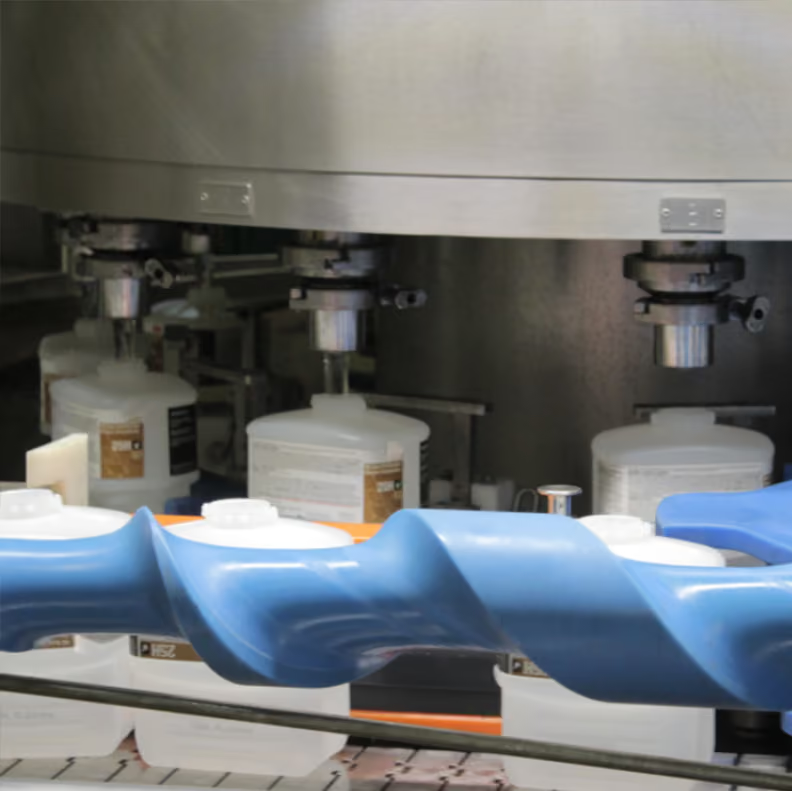
We engineer the line. You arrive with a formula and a target format. We translate it into the mixing, blending, and filling setup, the chemical-handling controls, and the cross-trained crew that will produce it to spec, batch after batch.
02

A real production sample lands on your desk.

Before any commercial run, you hold your formulation mixed, filled, and finished on a true, fully scaled line. Test it against your specs. Walk it through QA.
03

Commercial production at your scale.

Once approved, we run the line. Batch records, run rates, compliance, on-time delivery. You don't chase status updates. We surface what's next.

We engineer simplicity. You grow the brand.

As your contract manufacturer, we're the team responsible for everything between your formulation and your finished good. One operational standard runs across every batch. Consistent, cross-trained crews, the same line discipline, the same documentation behind every shipment.

US-Based

Wisconsin facility

~328,000 sq ft

Dedicated site

BRCGS AA+

9 years running

Your supply chain is a competitive advantage. We amplify it.

Tell us about your product. We'll make sure the right team is ready to have a real conversation with you.

Talk to us

FAQs

What co-manufacturing services does Truvant offer?

Blending, mixing, filling, bottling, and pouching, run in FDA, ISO 15378:2017, ISO 9001:2015, and cGMP-certified environments with BRCGS AA+.

Can Truvant handle both manufacturing and packaging under one roof?

Yes. We integrate co-manufacturing and co-packing in the same campuses, cutting hand-offs, transport costs, and supply chain complexity.