
Primary, secondary and retail-ready packaging, kitting and displays, run across 330+ production lines and seven campuses in North America and Europe. You bring the product. We engineer the pack, run the line and ship to your retailer on time.
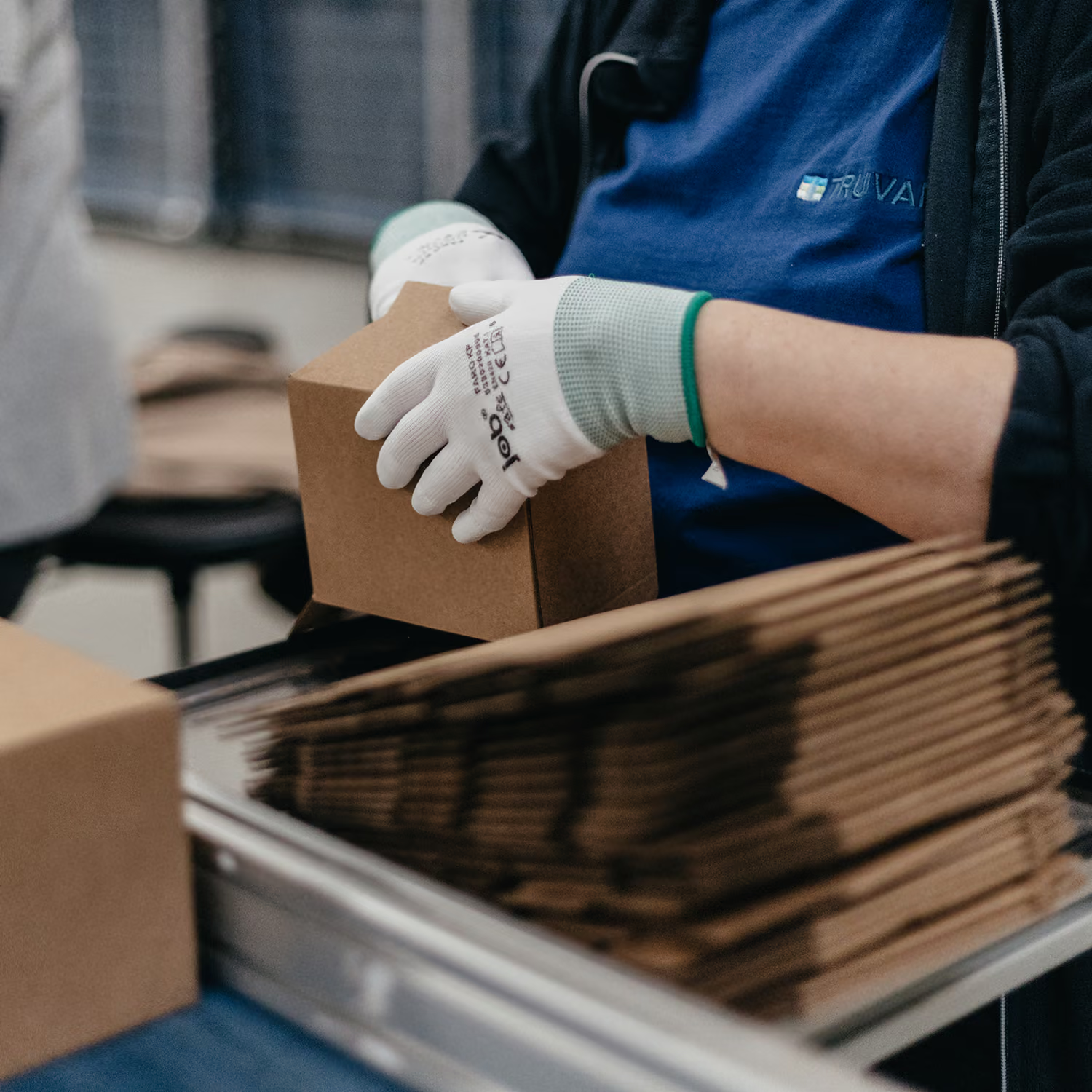
Each area runs on dedicated lines with cross-trained crews, to the same operational standard across every shipment.
Speed to Market
Carded, clamshell, sleeve, carton, case. The format your category lives in, run at the volume your retail buyer expects.
- Sleeving and Bundling
- Cartoning & Case-Packing
- Contract Bagging
From a small batch to millions of units a week.
See our Primary and Secondary packaging services
Capacity Flexibility
Multi-component finished goods built in-line. Retail-ready, season-specific, promotion-tagged. Assembled and validated before the carrier shows up.
- Special & Seasonal Packs
- POS & Display Builds
Right-first-time across multi-SKU sets, gift packs, and promotional bundles.
Co-Development
Postponed packaging that holds finished-goods variability until the demand signal arrives. SKU complexity that doesn't slow the line down.
- Postponed Packaging
- SKU Complexity Management
Eliminates damage chargebacks and finished-goods inventory exposure on seasonal SKUs.
Contract packaging is outsourcing the packaging of a finished product to a specialist partner. The brand supplies the product, or the spec for it, and the contract packager (also called a co-packer) puts it into its primary pack, secondary pack and shipping case, then delivers it ready for retail or eCommerce. The brand keeps ownership of the product. The packager owns the lines, the labor, the quality checks and the output.
That covers a wide range of work. At one end is a cartoning line running the same SKU for months. At the other is a holiday gift set with eight components, hand-assembled by a trained crew for a six-week retail window. Most brands need both at different points in the year, which is why the choice of contract packaging company matters more than the choice of any one machine.
Truvant has packed for consumer brands since 1994, when the business started as Prairie Industries in Wisconsin. Today we run seven campuses across the United States and Poland, with more than 3,100 people. Our average customer has stayed with us for over 16 years.
Each service runs on dedicated lines with cross-trained crews, held to one quality standard at every campus. Most programs combine two or three of them.
Primary and secondary packaging
Primary packaging touches the product: the bottle, pouch, blister, jar or sachet.
Secondary packaging groups and presents it: the carton, sleeve, multipack or shrink bundle a shopper picks up.
We run both, including cartoning, sleeving, bundling, flow wrapping, labeling, product marking and case packing, from small batches to millions of units a week.
Blister and clamshell packaging
Face seal, full-face seal, trapped and slide blisters, sealed onto pre-formed cavities or thermoformed inline.
Materials include rPET with up to 80% post-consumer recycled content and paper blister board.
Our New Jersey campus adds high-volume blister capacity for vitamins, supplements and OTC products, running more than 500 million blisters a year.
Kitting and assembly
Multi-component kits built in-line: gift sets, variety packs, sampling kits and promotional bundles.
Kitting is where SKU counts climb fast, so every configuration is validated before the first case ships, and the build is right the first time across multi-SKU sets.
Shelf-ready and retail-ready packaging
Shelf-ready packaging lets a store associate put a full case on shelf in one move: open, tear, place.
We build shelf-ready and retail-ready cases to each retailer's spec, so the pack clears the receiving rules at the club, grocery or mass account it is going to.
Promotional displays and POS builds
Shipper displays, PDQ trays, counter units and floor-standing displays, filled with product and shipped as one unit.
Display programs hang on a retail reset date that does not move, so we plan labor and materials back from that date.
Seasonal, special and limited-edition packs
Holiday gift sets, launch kits, limited editions and seasonal multipacks. These programs have short windows and high SKU counts.
We scale trained crews up for the peak and back down after it, without pulling people off your baseline volume.
Repacking, relabeling and rework
Converting finished goods for a new channel or market: club packs, multipacks, language and regulatory relabels, promotional over-stickers, and rework when a label or spec changes after production.
Repacking keeps product sellable instead of written off.
Postponed packaging and SKU complexity
Postponed packaging holds product in a neutral state until the demand signal arrives, then packs it for the channel, retailer or country that needs it.
It cuts finished-goods inventory and the write-offs that come with seasonal SKUs.
Bagging, pouching and bottle filling
Contract bagging, pouching and bottle filling for dry and solid products.
Our New Jersey campus fills more than 250 million bottles a year for vitamins, minerals and supplements.
Liquid filling for household and industrial products runs through our liquid contract manufacturing team.
Most programs touch at least two levels, and a change at one level ripples into the others. A new carton size changes the case count. The case count changes the pallet pattern, and the pallet pattern changes freight cost. When one partner runs all three levels, one team catches those knock-on effects before they reach the dock.
Primary Packaging
What it does: Holds and protects the product itself
Typical formats: Bottle, blister, pouch, jar, tube, sachet
What we run: Filling, blistering, sealing, labeling
Secondary Packaging
What it does: Groups, brands and sells the units
Typical formats: Carton, sleeve, multipack, gift box, display
What we run: Cartoning, sleeving, bundling, kitting, display builds
Tertiary Packaging
What it does: Protects goods in shipping and handling
Typical formats: Shipping case, tray, pallet, stretch wrap
What we run: Case packing, shelf-ready cases, pallet builds to retailer spec
Capital stays free. A cartoner, a blister line or a display crew is a fixed cost. A contract packager spreads that cost across many programs, so you pay for output instead of idle equipment between seasons.
Capacity follows demand. Promotions, launches and holiday peaks need extra labor for weeks, not years. We scale trained crews and move work between lines and campuses when volumes shift.
Faster to shelf. A new format needs engineering, materials and a qualified line. For programs that fit existing equipment, our teams stand up a new packing line in about two weeks.
Audits already passed. Food, supplement, cosmetic and OTC packaging each come with their own audit regime. Our campuses already hold the certifications retailers and regulators ask for (see below).
Your team stays on the brand. Your people spend their time on product, marketing and customers. Ours spend theirs on lines, crews and on-time delivery.
Outsourcing is not always the right call. A brand with one stable, high-volume SKU and its own automated line often does better in-house. The case for a contract packager grows with SKU count, seasonality, format changes and the number of regions you ship to.
Certifications tell you which audits a contract packager passes. Ask which campus holds which, because scope varies site by site. One quality management system runs across our campuses, with shared SOPs, central quality leadership and cross-site audits.
See why brands choose Truvant for our full quality approach.
Certifications tell you which audits a contract packager passes. Ask which campus holds which, because scope varies site by site. One quality management system runs across our campuses, with shared SOPs, central quality leadership and cross-site audits. See why brands choose Truvant for our full quality approach.
Packaging choices made at the line add up across millions of units. Our engineers redesign packs to cut material, swap plastics for recycled or paper-based options, and test new materials before they reach a production run.
One nail care brand moved its packaging from 12% to almost 100% rPET at an 80% post-consumer recycled spec in under a year, removing 13.3 tonnes of virgin plastic in 2024 with no disruption to supply. Across our European operations, 86% of the packaging material we used in 2025 was paper-based, and Truvant Europe holds an EcoVadis Silver Medal (79/100, 92nd percentile).
Read more about sustainable packaging and our sustainability program.
Short-listing contract packaging companies is mostly about matching their proof to your program. These are the questions we would ask in your position:
A word on "contract packaging near me." Distance to your distribution centers matters for freight. A partner with campuses on your main lanes, and in the regions you sell to, usually matters more than the closest building.
Every quote starts from your spec, because the same product can cost very different amounts to pack. The main drivers:
Pricing is usually quoted per unit or per labor hour. Engineering a pack for fewer components or faster line speed often lowers cost more than negotiating the rate.
Contract packaging and co-packing describe the same service: a partner packs a product that someone else makes. Contract manufacturing goes one step earlier and makes the product to your formula or spec, then packs it. Truvant does both, so a program can move from packing to filling without changing partners. For the full comparison, see co-packing vs co-manufacturing and our contract manufacturing services.
When the volume projections jumped overnight, this leading prestige beauty brand needed a partner who could match the new run rate without changing how the product looked on store shelves.
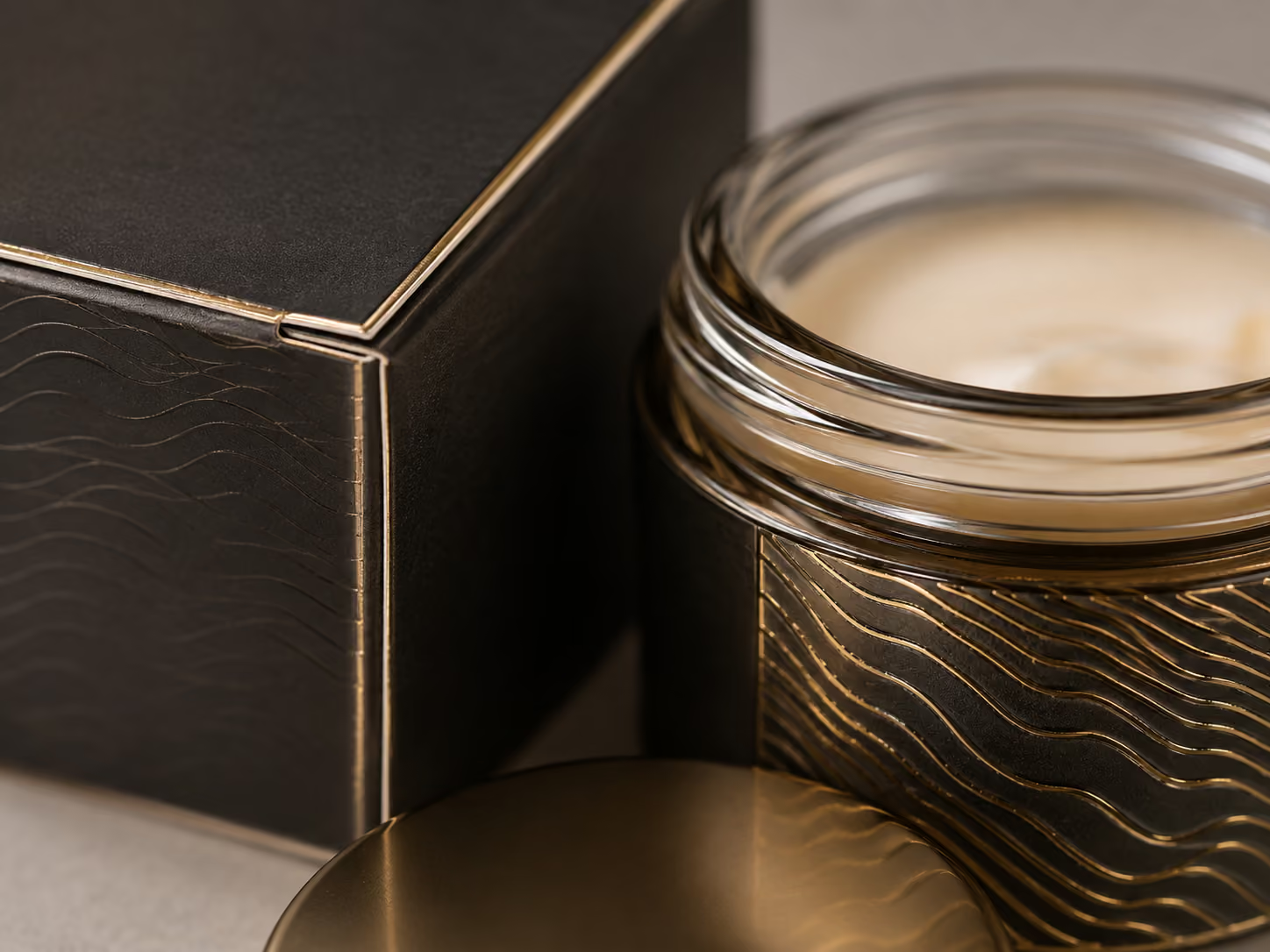
When the volume projections jumped overnight, this leading prestige beauty brand needed a partner who could match the new run rate without changing how the product looked on store shelves.
Contract packaging is outsourcing the packaging of a finished product to a specialist partner, who runs primary and secondary packaging, kitting, labeling, case packing and retail-ready displays. Truvant runs contract packaging across 330+ production lines and seven campuses in North America and Europe.
Primary and secondary packaging, blistering, cartoning, sleeving, bundling, flow wrapping, labeling, kitting and assembly, shelf-ready cases, promotional displays, seasonal packs, repacking and relabeling, bagging, pouching and bottle filling. Most programs combine several of these.
Yes. Contract packager, co-packer and contract packing company all describe a partner that packages a product another company makes. A contract manufacturer also makes the product.
Match their proof to your program. Check certifications by campus, ask for programs like yours, confirm you get a physical sample before production, and ask how they handle surge volume, sourcing, reporting and the regions you sell in.
BRCGS AA+, FDA registration, cGMP, USDA, ISO 9001:2015 and ISO 13485, plus NSF, Organic, Gluten Free and Kosher at our New Jersey campus. Truvant is SMETA audited and Truvant Europe holds an EcoVadis Silver Medal. Certifications vary by campus.
For programs that fit existing equipment, we can stand up a new packing line in about two weeks. A dedicated new facility takes longer; our largest greenfield campus went from contract to commercial production in six months.
Seven campuses: Prairie du Chien and Boscobel in Wisconsin, Haslet in Texas, New Jersey, and Stryków, Łódź and Wrocław in Poland.
Yes. US programs run from our Wisconsin, Texas and New Jersey campuses, and EU programs run from Poland, under one quality management system. Country-specific labels and language variants are packed in the region where they are sold.
Food and beverage, beauty and personal care, health and wellness (vitamins, supplements, OTC), toys, household goods and pet care, across North America and Europe.
It depends on labor content, volume, SKU count, materials, regulatory scope and freight. Pricing is usually per unit or per labor hour, quoted after a spec review.